Readers taken on ‘Immortal’ Journey by Genea Webb/ New Pittsburgh Courier
Beautiful and transforming are the words that first come to her mind when author Valjeanne Jefferies describes what excites her about the craft of writing.
“It allows you to change the circumstances around you. If you can envision a world that’s better than you live in, you can create an imaginative environment and fill it with extraordinary people,” explained Jefferies who currently resides in Alabama and is a graduate of Spelman College and North Carolina Central University.
That’s the exact formula Jefferies implemented when she wrote the science fiction/fantasy Immortal series of books. The series includes “Immortal”, “Immortal II: The Time of Legend” and “Immortal III: Stealer of the Souls.”
Other novels include “The Steamfunk novels: “Immortal IV: Collision of Worlds 2nd and The Switch II: Clockwork” and “Space Colony.” Her work has appeared in The Ringing Ear; Black Poets Lean South, Revelry, and A Sword and Soul Anthology.
Jefferies chose to self-publish her novels usually through create space under the names Valjeanne Jefferies or Valjeanne Jefferies Thompson. Jefferies has had her poetry published traditionally, but found that getting science fiction published was a different beast…
Read the rest of the article here.
Preview or purchase my novels here.
This is an excerpt of a review of Immortal and Immortal II: The Time of Legend written by world renown writer Charles Saunders, creator of Sword and Soul, and author of the Imaro series, the Dossouye series and Damballa.
So without further aideu here is Charle’s amazing review: Immortality.
“Consider a world that is much like our own, but better in a ways that matter most, especially considering the ecological chaos, economic malaise and ethnic discontent.
Consider a world that is post-racial, but still acknowledges racial differences.
Consider a world in which shape-changing and sorcery co-exist with advanced technology.
Consider a utopia on the brink of disaster…
Author and poet Valjeanne Jeffers has considered all these things and more, and has synthesized them in the form of two novels: Immortal and Immortal II.
These are novels of magic and multiplicity. Their setting is New World Tundra, which may or may not be an alternate earth, or our earth in the future. The time is the year 3075 — four hundred years after a spasm of war, crime, and pollution came close to destroying the planet. In the wake of this warfare, known as the Time of Legend, Tundra’s population pulls itself back from the brink of destruction and transforms itself in a Great Society.
Here’s how Valjeanne describes it:
‘But in the year of our One 3075, war, crime and pollution didn’t exist.
Contamination of the environment was illegal. Recycling was mandated by planet law. Weapons had been outlawed and purged from New World Tundra.
Only a few remained on display in museums. Prisons had become behavioral clinics where inmates were taught the life skills they needed to be mainstreamed back into society.
It was illegal to have homeless living within one’s borders, and cities were punished with heavy fines if they didn’t house them in private living quarters.
Junkies were the exception to this rule, since so many of them lived in dormitories; and they were locked out if they missed curfew. It was forbidden for a citizen to be unemployed if he could work. Tundra law dictated that every able-bodied man and woman must be given a job, and it was forbidden to pay a citizen less than she needed to buy both necessities, and a few luxuries.
Racism and sexism were also relics that the New World had discarded during the Time of Legend, when everyone had been fighting to survive the holocaust. Then, they were luxuries the planet couldn’t afford.
Now, like the chemical waste that had once poisoned Tundra, they’d been forgotten.’
Race is still recognized on Tundra. But the labels are different. Blacks are ‘Indigos.’ Whites are ‘Fuchsias.’ Native Americans are ‘Coppers.’ Asians are ‘Ambers.’ Hispanics are ‘Bronzes.’ The words are different, but the melody lingers on.
Addictive drugs — an upper called ‘rush’ and a downer called ‘placid’– are legal in the New World. At the same time, admittance to government-sponsored rehabilitation clinics is free.
The protaganist of the Immortal novels is a young, Indigo woman named Karla. She works as a caretaker (healer) at a clinic called CLEAN (Clean Living Experiences and No Chemical Dependency). She’s a former addict who is now helping others to kick their habits.
Karla’s personal life should be as ideal as that of her society. But it isn’t. She is plauged by dreams and hallucinations involving a mysterious Indigo man, a seductive figure who seems to want to take her out of herself.
This dream-man is not a figment of Karla’s imagination. He is real, though his reality is not the material, rational, world of Tundra.
His name is Tehotep. His is Other. And he spells trouble, not only for Karla but also for the benevolent-but-rigid underpinnings of the New World.
Change is the operative word. Karla and her new friend and lover, a Copper artist named Joseph, discover that they can transform themselves into werewolf-like creatures that are immensely fast and powerful, but retain their human intelligence. In the meantime, Tehotep is collecting acolytes and remaking them into nightmarish monsters that obey him without question…
In Immortal II, the shape-shifting lovers find themselves transported to the Tundra of the past…the Tundra of the Time of Legend, ‘The most violent era Tundra had ever known.’
The wars are not only occurring on Tundra. There are another ones as well, between Tehotep and beings known as Guardians–and an incarnation of Karla from another time…
The Immortal novels are multi-racial, multi-cultural, and multi-dimensional. Valjeanne is adept at writing about relationships,everyday activities, conflicts, near-future technology technology, and mind-boggling magic. She can also snap a plot twist on par with the best of the thriller writers. These books are a wonder and a pleasure.”
To read this review in its entirety vist Charles Saunders site and click on Recommended and then Immortality. And check out the rest of Charles’s awesome reviews.
Review of my novella The Switch In the Spelman Messenger!
To purchase or preview my titles visit my site
http://www.alabamaphoenixfestival.com/
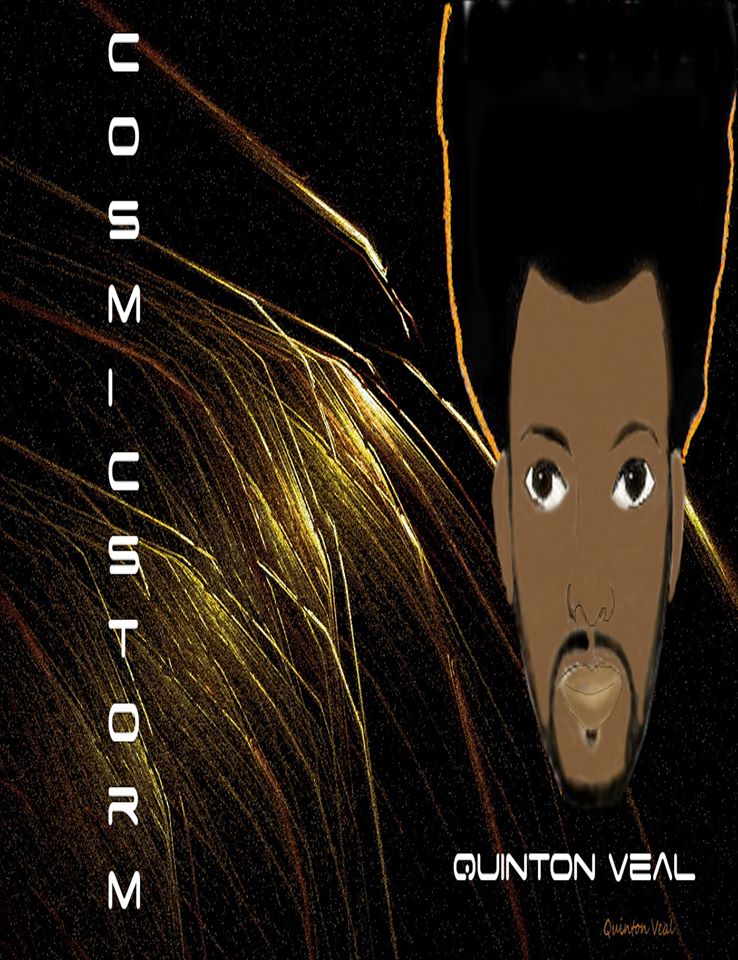
Check out the works of Valjeanne Jeffers and Quinton Veal here
Reblogged from David Gaughran:
I was at the London Book Fair last week - and I'll be blogging about that soon - when the news broke that David Mamet is to self-publish his next book.
His reasons? "Publishing is like Hollywood—nobody ever does the marketing they promise."
While I think it's great that someone as high-profile as David Mamet is self-publishing, I was very disappointed to find out the
Reblogged from David Gaughran:
Writing is a glamorous occupation - at least from the outside. Popular depictions of our profession tend to leave out all the other stuff that comes with the territory: carpal tunnel syndrome, liver failure, penury, and madness.
Okay, okay, I jest. I love being a writer. Sharing stories with the world and getting paid for it is bloody brilliant. It's a dream job, and like any profession with a horde of neophytes seeking to break in, there are plenty of sharks waiting to chew them to bits.
Only weeks ago, we were chatting on the phone about how cool it would be to produce a short horror film together. We reserved a domain name for our nonexistent website and created an empty Dropbox folder. Fast forward: Now we have a script, a cast, donors, Facebook and Twitter pages and a shooting date: May 25th
We’re thrilled that we have cast veteran actor…
From the Great Traveling Round Table of Fantasy Bloggers
The Difference Between SF and Fantasy by Carole McDonnell
Science Fiction generally falls into two categories: hard or soft. Depending on the reader’s belief in his scientific aptitude or love of hardware technologies, the SF reader can explore technological, biological, physiological sciences that are emerging, yet to come, probably possible and hypothethical.
The Fantasy writer and reader roam larger territories. Sometimes those territories are far afield from modern known science, sometimes they are mental realms, sometimes spiritual arenas, sometimes past historical and cultural lands.
The science fiction reader joins the SF writer in seeing how far the mind of man can go, often learning about and wading deep into some emerging science the author or the reader share. And often the sf reader will have the sf novel in one hand, a scientific tome in the other, and be sitting in front of the computer: facts are checkable.
The fantasy reader may read her fantasy book alongside another book — if that other book deals with some lore of some lost culture. But the fantasy reader is just as happy to venture into the unknown world of the author’s mind. All the reader asks, however, is that the novelist be true to the world he or she has created.
Whether the fantasy novel deals with European vampires, Native America shapeshifters, East Indian demi-gods, European elves, alternate realities, far off planets, Earth analogues, living, dead, non-living, eternal, godly, helpless, miniscule, mammalian, oceanic, elemental, speaking, non-speaking, beings within this galaxy, across galaxies, planetary, geophysical, or plainly and simply human, the fantasy world the author creates must be held up to the collective scrutiny of its readers.
Fantasy is game-playing of a higher order of imagination than Science fiction because the SF author is bound by and exploring the ramification of rules he has found. But the fantasy author is examining larger premise of creativity. This is not to say that science fiction is not creative but while Science fiction aims to discover and seek out rules and aspects of life that is already there, the fantasy writer aims to create whole new worlds or culture, emotion, and spirit.
No wonder, then, that fantasy comes in so many forms with so many varieties. Fantasy is extreme.
Carole McDonnell holds a BA degree in Literature from SUNY Purchase and has spent most of her years surrounded by things literary. Her writings appear in various anthologies including “So Long Been Dreaming: Post-colonialism in science fiction,” edited by Nalo Hopkinson and published by Arsenal Pulp Press; Fantastic Visions III” anthology published by Fantasist Enterprises; “Jigsaw Nation” published by Spyre publications, “Griots: A Sword and Soul anthology,” edited by Milton Davis and Charles Saunders, “Life Spices from Seasoned Sistahs: writings by mature women of color,” “Fantastic Stories of the Imagination” edited by Warren Lapine and published by Wilder Publications.
Her novel, Wind Follower was published by Wildside Books. Her other works include My Life as an Onion, Seeds of Bible Study: How NOT to Study the Bible. Her collection of short stories, Spirit Fruit: Collected Speculative Fiction, is available on kindle and also at Lulu.com Her second novel, The Constant Tower, will be published in 2013
SciFi Versus Fantasy? by Theresa Crater
I teach a class in writing speculative fiction and often use Orson Scott Card’s book How to Write Science Fiction and Fantasy. In it he classifies Anne McCaffrey’s Dragonriders of Pern and Marion Zimmer Bradley’s Darkover series as science fiction rather than fantasy. Why? Because they take place on other planets. I say hooey.
Why? Because they have all the earmarks of fantasy. Early fantasy reinvented the medieval, mostly European. It brings Celtic, Norse and Germanic mythology to life. Now writers are expanding culturally, which is all to the good, but many fantasies still take place in a predominantly agricultural world whose cities have castles, farmer’s markets and guilds of artisans. Then there are the aristocrats and rulers along with their soldiers or knights. People move about on horseback for the most part. Or sail on ships. Fantasy is pre-industrial revolution.
Many say science fiction began with Frankenstein, although it’s still got a lot of hidden alchemy and magic in it. But the text argues between the old mistaken alchemy and the new correct chemistry. Much of the science in that text looks like dark fantasy to us now, but that was the science of the day. Science fiction is the conscience of science. It looks over the shoulders of men in their laboratories and asks, “What will happen if?” What will be the moral, social and personal price humanity pays for your discovery? It’s the same question Mary Shelley asked.
Urban fantasy has complicated the picture, but the reason it’s fantasy is that it convinces us that the possibilities science tells us are not real are real after all. Faeries exist. Vampires haunt the night. But if you add aliens, then I’ll have to say we’re back to science fiction.
Theresa Crater brings ancient temples, lost civilizations and secret societies back to life in her paranormal mysteries. The shadow government search for ancient Atlantean weapons in the fabled Hall of Records in Under the Stone Paw and fight to control ancient crystals sunk beneath the sea in Beneath the Hallowed Hill.
Her short stories explore ancient myth brought into the present day. The most recent include “The Judgment of Osiris” in Tales in Firelight and Shadow and “White Moon” in Ride the Moon. Writing as Louise Ryder, she publishes women’s fiction. God in a Box returns us to the 1970s world of feminism and Eastern philosophy. Theresa has also published poetry and a baker’s dozen of literary criticism. Currently, she teaches writing and British lit in Denver. Visit her at http://theresacrater.com.
Science Fiction and Fantasy: We All Know the Difference, Right? by Warren Rochelle
One of the first questions I ask my students in both my fantasy and science fiction lit classes is just what is the difference between these two closely related genres. After all, as Ursula Le Guin says, “Fantasy is the ancient kingdom of which science fiction is but a modern province.”
Close relations indeed, one the descendant of the other, or rather one evolving from the other, the metaphors and tropes of fantasy of sword, sorcery, the Hero and the Quest, magic, fairy kingdoms, monsters, and the rest, giving way to the metaphors and tropes of technology and the machine, of science, and other worlds and aliens.
The simplest distinction is, of course, magic and science, the impossible and the possible. Or, to cite a definition that appeared on the listserv of the SFRA (Science Fiction Research Association, whose purview is SF and fantasy), “if the story has dragons in it, it’s fantasy, but if the dragons are given an evolutionary history, it’s science fiction.” I would modify that slightly: if the story has dragons in it as one of the native fauna, it’s fantasy, but never mind that.
So, Elves, fairies, witches, wizards, magic—the impossible, fantasy. Spaceships, lasers, warp drive, aliens and mutants—the possible, science fiction.
All right. But just the other day, my individual study student this semester, Evan, turned in a blog post on Dune. First, Evan’s individual study is the writing of a science fiction novel, along with some readings and journals. I suggested Dune. After all, it is one of the greatest science fiction novels ever written. Everybody knows that, right?
Evan begged to differ: “One important thing to note about Dune is that it’s not really a science-fiction story. It’s a fantasy. It’s about a chosen prince having his kingdom stolen, then mastering the magical arts and fighting, as well as befriending the natives of his land and the super-powerful creatures that inhabit it, all to overthrow the evil emperor and reclaim his rightful place. The whole story reeks of fantasy. They have swordfights for one thing.”
Wait a minute. Many of Paul’s abilities as Kwisatz Haderach come from his genetics—he is the product of a ninety-generation breeding program, a long-awaited messiah. His prescience gets “turned on” when he takes the Water of Life, a natural by-product of the life cycle of the giant sandworm. His enhanced mental abilities are, in part, attributed to his training as a mentat, a human computer. Doesn’t that make the novel science fiction?
Not according to Evan. He argues that the novel doesn’t need to be science fiction: “The emperor’s ships could be boats on an ocean just as easily as spaceships … The sandworms are basically dragons or wyverns and Paul’s [Kwisatz Haderach] status is basically that of a wizard or a magical hero. He’s not a sci-fi hero. He doesn’t make machines, tinker, or have any real connection to technology . . .
While the story does contain loose sci-fi elements, aside from a singular instance of a small drone being used and the fact that their economy relies on large spaceships, the story is simply not sci-fi. It is science-fiction flavored fantasy.”
All right. Evan does have a point and I wasn’t able to shake his conviction—not yet anyway. If we were to have this discussion again, here is what I use to counter his argument. I would point out that Paul has and does use atomic weaponry and the spice, another sandworm by-product, is harvested by machines. A force field surrounds the family castle.
I would ask if the SF hero has to make machines or be connected to technology? Not those with psychic powers, which Paul has. But, more importantly, a primary basis of the novel, its controlling metaphor, is ecology, or interconnected biological systems—here, an entire planet. The Fremen, thanks to Liet-Kynes, and his father, are superb field ecologists, and have given over their entire culture to the mission of bringing water to their desert world.
It is here, I think, that Evan’s argument that the novel is fantasy doesn’t quite work. Yes, the relationship between the two genres is clearly discernible in his analysis of Dune, particularly in how science fiction evolved from fantasy through a reimagining of familiar metaphors and symbols and devices. Science fiction is, in many ways, the modern response to the questions and themes of fantasy.
I am not suggesting that ecology can’t be a theme in fantasy; it often is, including the idea that magic itself must be saved, conserved, and renewed, if necessary. But the world-view of Dune, ultimately, is rooted in science, the possible, not the magical, the unseen, the impossible but still the imagined,
And that, I think, might be the difference between science fiction and fantasy.
Warren Rochelle has taught English at the University of Mary Washington since 2000. His short story, “The Golden Boy” (published in The Silver Gryphon) was a Finalist for the 2004 Gaylactic Spectrum Award for Best Short Story and his novels include The Wild Boy (2001), Harvest of Changelings (2007), and The Called (2010.
He also published a critical work on Le Guin and has academic articles in various journals and essay collections. His short story, “The Boy on McGee Street,” was recently published in Queer Fish 2 (Pink Narcissus Press, 2012). Contact him at: http://warrenrochelle.com
The Difference Between Fantasy and SF is Horses by Andrea Hosth
If your characters get about on horses, you are writing fantasy. If they travel using something mechanised, then you are writing SF. Your SF can have wizards, and spaceships which fly through hand-waving. Your story can lack any form of magic whatsoever, but if the tech level has not advanced beyond the equivalent of a horse-drawn cart, it’s still fantasy.
This is almost not an exaggeration. Reader expectation is a force which can easily overcome author intention. What you write may be fantasy, science fiction or some combination of both, but your setting is what determines whether or not a story is science fiction.
Still, if I am to take a serious stab at the question, I’ll start by considering the definition that “science fiction is what could be, while fantasy is what never could be”. Of course, this is a definition which works best if you take a strict “hard science fiction” approach to SF, since a very large portion of science fiction involves magic-equivalent hand-waving science.
There are many definitions for fantasy, mostly revolving around some variation of “has magic”, but that is a definition which quickly falls down. I prefer to regard fantasy as “any story where the setting/worldbuilding is intended to be different to an accurate depiction of our own world”. Thus a historical novel (intended to be accurate) is not fantasy, but alternate history is fantasy, books with working magic are fantasy, stories set in the future are fantasy (because there is no possible way for them to be truly accurate). Hard or soft, sword and sorcery, magic realism – the crux of the fantasy genre is that something exists in the story which demonstrably cannot be located and pointed out as having existed in (the current agreed understanding of) our world.
Science fiction is thus a subset of fantasy, and the question becomes how it separates itself off from the broader genre. A quick perusal of the Mohs Scale of Science Fiction Hardness shows that even the completely soft end of science fiction can still be regarded as “unambiguously science fiction” – though in this case it appears that science fiction can be science fiction purely in terms of setting, which brings us back to the horses. The TV Tropes site goes on to base science fiction firmly in the realm of a ‘what if’ story, and makes the crux of the story a ‘technological difference’.
So, science fiction is a story where there is an intentional difference to our world where the crux of the tale depends on a difference in technology/science. Even if the science is not rigorous, and cannot by any means be considered hard science fiction, it is still science fiction if the core of the story is “what if this this technology…”.
Stories which have a scientific setting, but which are not interested in that setting – where the technology is of no import to the tale but is merely a fancy dress which could be exchanged for other fantastic clothing – could perhaps be termed science fantasy. And the flip side – stories with horses and magic where the crux of the story is a technological question?
I recently discussed the question of science fiction vs fantasy in my own novels, pointing out that the magic-rich Champion of the Rose has at its core a technological question – it’s a “genetic manipulation gone wrong” story in a fantasy setting. I suppose this may be termed “fantastic science”, since it’s using a magical means to attain a scientific action.
But, on the whole, my definition is my definition. Like so many other genre questions, it becomes an “I know if when I read it” answer, with every individual’s answer having some slight variance, and most readers interested in specific sub-genres rather than the whole breadth and depth of fantasy or science fiction.
Meanwhile, I’ll be over here writing about a mechanical horse.
Vampires or Space Helmets…Fantasy or Science Fiction? by Valjeanne Jeffers
Technology and fantasy: put them together and you have a delicious synergy that’s not quite SF, not quite fantasy. Some of my favorite authors have skirted the divider between fantasy and science fiction. Octavia Butler, for example, while she is almost always described as a science fiction author blended the two quite brilliantly in books like Wild Seed 
and Clay’s Ark. Nalo Hopkinson also combined them with sheer genius in her novels Brown Girl in The Ring
and Midnight Robber.
The existence of technology in fantasy often results in the co-existence of “science and sorcery,” as Charles Saunders (creator of Sword and Soul) has described my Immortal series. In my novels you have werewolves and vampires—totally in control of their preternatural abilities and using said abilities to protect their universe; but still such characters are most often found in fantasy or horror genres. Yet the Immortal series also has time travel, aliens… and technology to support its futuristic setting. Such as in the excerpt from Immortal book 1:
Karla walked across the wooden floor of her living area into a kitchenette. A press of her fingers on the first sphere of a triangular pod started coffee brewing.
She filled a cup with chicory, walked back into the living area and pushed the second button on her remote, activating a blue panel beside the window. Jazz music filled the apartment. Like her bedroom console the unit kept time, transmitted holographic images and played tapes. Using the third button, she opened the curtains.
Thus, the Immortal novels have been described as both fantasy and science fiction novels. Use a little science and one still can be considered a Fantasy writer. Use a bit more and you’ve inched into the science fiction genre. An excerpt from Colony: A Space Opera (my novel in progress) illustrates this point:
She was born 20 years after Planet Earth’s decline. The same year IST began building the probes: lightweight spacecrafts that humans could live in for years, if need be, and that moved fast enough to break the sound barrier—traveling millions of miles within weeks.
In 2065, global warning had accelerated. The final stage in Earth’s destruction had begun. Temperatures of 150 degrees scorched the planet. Tidal waves, monsoons and cyclones tore it apart. Those who could afford it moved underground. Food became the world’s most valued resource. The rest were herded under the domes.
Scientists scurried to genetically reproduce fruits and vegetables—with horrible side effects. Money still ruled the world. But money was gradually becoming worthless. That’s when the government saw the writing on the wall and created IST and the probes: spacecrafts designed for one purpose, to seek out planets capable of sustaining human life.
When a writer uses technology in fantasy, the lines between the genres are even more gloriously buried. What may be described as science fiction by one reader/writer can just as easily be characterized as fantasy by the next. The only real rule here is to make one’s technology believable; credible; plausible. Although it doesn’t yet exist—in a kind kind of literary sleight of hand.
Pulling this off, just gives me one more reason to absolutely love speculative fiction…even if no will ever be able to figure out whether I’m a science fiction or fantasy writer. I think I prefer it that way.
Valjeanne is the author of the Immortal series, The Switch II: Clockwork (includes books I and II) and several short works of fiction.
Her fiction has appeared in Steamfunk!, Griots: A Sword and Soul Anthology, LuneWing, PurpleMag, Genesis Science Fiction Magazine, Pembroke Magazine, Possibilties, 31 Days of Steamy Mocha, and Griots II: Sisters of the Spear (in press). She works as an editor for Mocha Memoirs Press and is also co-owner of Q and V Affordable editing.
Preview or purchase her novels at: http://www.vjeffersandqveal.com
Blog at WordPress.com. Theme: Nishita by Brajeshwar.